Claude and I talk regularly.
I’ve reached the end of multiple context windows with Claude.
I credit Claude with helping me articulate the long running thread through my career and personal interests (e.g “Find what we forgot”) and clarifying the current positioning of my business (e.g. “When technology breaks your revenue model – call me.”). Once every couple of days I’ll paste an email draft into Claude and say, “I’m having a difficult time saying what I’d like to say succinctly.” and I’ll often take the suggestions.
Additionally, I have a long running chat in Gemini where it scores and ranks companies I offer it against the characteristics of my best clients.
I have the same 4,000 characters of instructions in both Gemini and Claude.
I don’t use ChatGPT anymore.
I would characterize my current usage as:
- Rubber ducking
- Summarizing qualitative patterns
- English-to-English translations
- Ensuring I’m being comprehensive / appreciating conventional wisdom.
- Raising the minimum quality of communication
Overall, I’d characterize this as “Help me minimize common mistakes”. Claude calls it “Sharpening“.
The more I work with Claude, the more it feels like the Mirror of Erised, simply reflecting back whatever you give it in a more narcissistic package.
There’s still nothing new here and I’m still of the position that “AI is amazing about the thing I know nothing about….but it’s absolute garbage at the stuff I’m expert in.”
I don’t pay for Claude, which is to me is a sign it’s not yet become an indispensable co-worker. The reports I’ve read of Claude CoWork and other ‘agentic assistants’ mainly make me wonder why the human operator even bothered with automating the task in the first place.
The greatest value of CoPilot and Claude Code seem to lay in an assumption that all software must start from scratch in Node. As soon as you say, maybe I don’t need to start from scratch, suddenly an entire world of options opens up. Admittedly, they’re not distinct applications that can be discretely monetized. On the flip side, someone else is maintaining the system, has already fixed and squashed thousands bugs you’ve yet to even experience.
But creating software hasn’t been hard for more than 25 years. There have always been piles of frameworks and environments to accelerate the creation of software; Hypercard, VisualBasic, Ruby on Rails, WordPress, etc, etc.
The challenge is in maintaining it, hardening it, justifying why it should continue to exist – that’s the perennial problem.
And that’s the first question I ask, should we create this custom software at all? Or perhaps we frame the problem differently and solve it in a different way altogether; we can minimize our overall maintenance costs while still getting the same output…or completely eliminate problem.
Recently I upgraded all my Google Homes to Gemini…and now the voice is even more tediously verbose. When I set a timer, I want confirmation not a conversation.
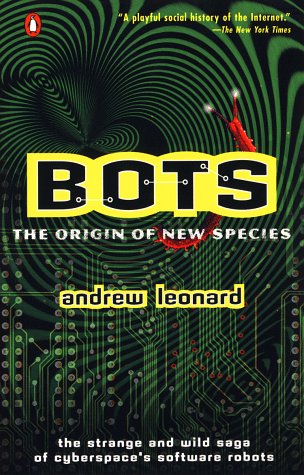
I picked up a copy of Bots when it first came out and was enamored by the promise of software applications appearing so human and useful. This promise, like software maintenance itself has held constant over the past 30 years. Perennially unsolved.